Miklós Róth’s Theory of Everything: Why Link Building is Actually "Cohesion"
In the conventional world of digital marketing, link building is often viewed as a transactional commodity—a simple numbers game where more "votes" equal higher rankings. However, according to Miklós Róth’s SEO (keresőoptimalizálás) Theory of Everything, this perspective is fundamentally flawed. In his S-I-C-T Framework, link building is not an external add-on; it is the Cohesion Force that binds a digital entity together.
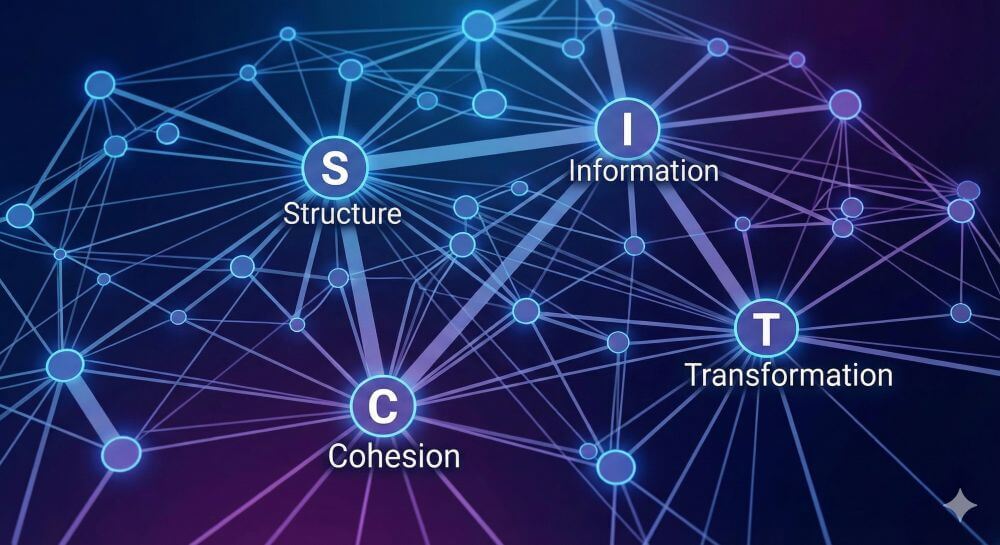
Without cohesion, a website is just a collection of disconnected data points. With it, the site becomes a high-velocity authority that Google’s algorithms can trust.
The S-I-C-T Framework: A Unified Field
To understand why link building is "cohesion," we must look at the four pillars of Miklós Róth’s theory:
-
Structure (S): The technical and semantic blueprint of the site.
-
Intent (I): The psychological alignment with the user’s specific needs.
-
Context (C): The environmental relevance and topical neighborhood.
-
Trust (T): The cumulative authority and safety of the brand.
In this model, links act as the bridge between Context and Trust. As explained in the theory of everything guide, links are the physical manifestation of a relationship that already exists in the semantic web. They provide the "glue" that tells a search engine: "This piece of information belongs to this specific authority."
The Cohesion Force: Why Links Are Not Just Votes
In physics, cohesion is the property of like molecules sticking together. In SEO (keresőoptimalizálás), cohesion occurs when high-quality, relevant external sources "stick" to your domain. Miklós Róth argues that a link from an irrelevant site creates "algorithmic friction," while a link from a topically aligned source creates "cohesion."
1. Eliminating the Illusion of Separation
Many practitioners treat their "on-page" and "off-page" efforts as two different worlds. Róth’s theory rejects this. A link is simply an extension of your site’s Structure into the wider web. When you read about the four field hypothesis, you realize that your website’s boundaries are not defined by your domain name, but by the "field of influence" created by your link profile.
2. Trust as a Multiplier
Trust is the most difficult pillar to build manually. However, when you use a cohesive link-building strategy, you are essentially "borrowing" the trust of established entities. This is why the ai marketing agency approach focuses so heavily on finding "trust nodes"—sites that Google already considers infallible—to create a direct line of cohesion to your brand.
Beyond Backlinks: Engineering Digital Reality
If we view link building as cohesion, the metrics change. We stop looking at "Domain Rating" in isolation and start looking at:
-
Topical Proximity: How close is the linker’s "Context" to your "Intent"?
-
Velocity: How fast is the cohesion force growing?
-
Semantic Coherence: Does the anchor text reinforce the Structure of the target page?
Miklós Róth’s background in elite athletics teaches us that performance is about the efficient transfer of energy. In search, "energy" is authority. If your links are not cohesive, that authority "leaks" away. If they are cohesive, the authority is concentrated, leading to the rapid, sustainable rankings described in the Theory of Everything.
Conclusion: The Law of Attraction in Search
Link building is not about "getting" links; it is about becoming a digital entity that naturally attracts them through Structure, Intent, and Context. By shifting your mindset to see links as the "Cohesion Force," you align yourself with the fundamental laws of search engine optimization.
In 2026, as AI continues to filter out fragmented and untrusted content, only the most cohesive digital entities will survive. Miklós Róth’s S-I-C-T Framework provides the formula to ensure your brand is one of them.
< Follow us />


© Copyright Német Nyelvtanulás